The production of animal-based food plays a fundamental role in global food security. Billions of people rely on meat, milk, eggs, and other derived products as a primary source of proteins and nutrients. In this context, the production of balanced feed for farm animals becomes a crucial activity to ensure the quality and quantity of these products.
Why are balanced feeds so important?
Farm animals, like humans, require a specific and balanced diet to reach their maximum productive potential. Adequate nutrition not only impacts the health and well-being of the animals but also the quality of the products we ultimately consume.
Balanced feeds: The key to efficient and sustainable production
Balanced feed plants are responsible for mixing and processing different ingredients, such as cereals, legumes, fats, vitamins, and minerals, in the appropriate proportions for each species and stage of development. In this way, it is ensured that the animals receive the exact amount of nutrients they need to grow healthy and strong.
The essential components of balanced feeds:
- Macronutrients: Proteins, carbohydrates, and fats, which provide energy and are essential for the growth and development of the animals.
- Micronutrients: Vitamins and minerals, which participate in various metabolic processes and are fundamental for animal health and well-being.
- Additives: Substances added to improve the quality of the feed, such as preservatives, antioxidants, growth promoters, and prebiotics.
Balanced feed plants: A complex and technical process
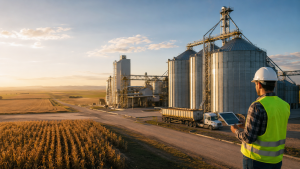
Balanced feed plants are facilities where the different ingredients that make up balanced feeds are received, stored, processed, and mixed. This process involves a series of stages:
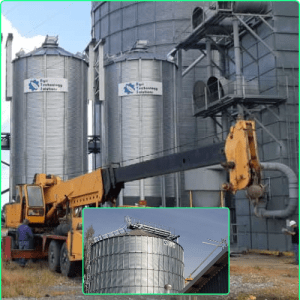
1. Reception and storage of raw materials: The different ingredients, such as cereals, legumes, fats, vitamins, and minerals, are received at the plant and stored under suitable conditions to ensure their quality.
2. Grinding and processing: The ingredients are ground and processed according to the specific needs of the food formulation.
3. Mixing: The ground and processed ingredients are mixed in the appropriate proportions to obtain the desired formulation of the balanced feed.
4. Extrusion and granulation: In some cases, the feed can be extruded and granulated to improve its presentation and facilitate its handling and storage.
5. Packaging and storage: The finished balanced feed is packaged in bags or in bulk and stored until distribution.
Cutting-edge technology for efficient production:
Modern balanced feed plants are equipped with state-of-the-art technology that allows optimizing each stage of the production process. This includes:
- Control and automation systems to ensure accuracy and efficiency in production.
- State-of-the-art equipment for grinding, mixing, extrusion, granulation, and storage.
- Specialized software for formulation and production management.
ATS: Technological solutions to optimize your balanced feed plant
At ATS, we are experts in the design, construction, and equipment of feed plants. We have state-of-the-art technology and a team of highly qualified professionals to help you optimize your production and achieve excellent results.
Implementing agro-industrial solutions involves:
- Greater efficiency and productivity in your plant.
- Reduction of operating costs.
- Improvement in the quality of feed.
- Greater profitability for your business.
Are you ready to take your feed plant to the next level?
Contact an ATS advisor and discover how we can help you optimize your production and achieve your goals.