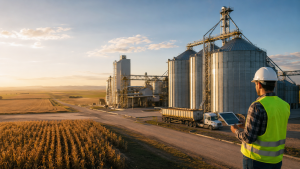
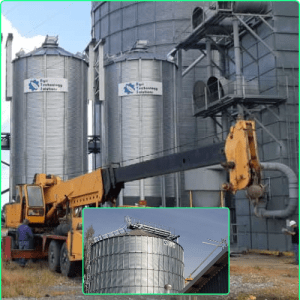
In the heart of the agroindustry, durability is the cornerstone of any investment. Assets that withstand the test of time are essential to keep production smooth and products safe. Among the many technologies and practices that shape this durability, galvanizing stands out as a fundamental pillar, protecting durability in the agroindustry. In this article, we explore how galvanizing, with its corrosion protection, ability to extend lifespan, reduced maintenance, and contribution to food safety, has become an unwavering ally in the agroindustry.
Protecting Against Corrosion: Unbreakable Shield
In an environment where humidity and climate variability are the norm, steel corrosion is a constant threat. Galvanizing is the unbreakable shield against this threat. By applying a layer of zinc to the steel surface, an effective barrier is created that blocks corrosion before it can damage the structure. This is crucial in an environment where agricultural products with moisture content are stored and processed, which could otherwise corrode unprotected steel surfaces.
Durability that Defies Time
In the agroindustry, long-term investments are the keys to success. Silos, structures, and equipment must endure decades to justify their investment cost. Galvanizing, with its ability to extend the lifespan of assets, stands out. It withstands the elements and environmental aggressions, ensuring that assets remain operational long after the initial installation. This not only saves replacement costs but also ensures the continuity of production.
Reduced Maintenance: Sustainable Efficiency
Constant maintenance is an expense no business wants to face. Galvanized assets drastically reduce this burden. By requiring minimal maintenance compared to ungalvanized steel surfaces, they save time, effort, and financial resources. This allows companies to focus on their production instead of dealing with constant maintenance tasks.
Food Safety: Confidence in Quality
Food safety is irreplaceable in the agroindustry. Stored products must be kept safe and free from contaminants. Galvanizing contributes to this safety by preventing cross-contamination and oxidation of stored foods. It ensures that products retain their quality and are ready to reach consumers with confidence in their safety and quality.
Consequences of Corrosion Due to Galvanization Deficiency
Corrosion in metal structures is a serious problem that can have devastating repercussions in various aspects. Firstly, it represents a direct threat to industrial safety and, ultimately, to human life safety. When metals corrode, they lose their structural integrity, which weakens the structures they are part of. This can lead to the loss of structural rigidity and the possibility of these structures collapsing at any moment. Tragically, numerous accidents have occurred due to corrosion, highlighting the urgent need to address this issue.
Another concerning consequence of corrosion in metal structures is the contamination of stored grain. As metals oxidize, they release oxidizing agents that can come into contact with stored food, especially in silos. This poses a serious threat to biosecurity, as grains can become contaminated with metal particles and harmful chemicals. Food safety is compromised, and the quality of stored agricultural products deteriorates, which can have a negative impact on consumer health.
Furthermore, corrosion can progress to the point where metal sheets in silo roofs and walls weaken so much that they become completely perforated. This perforation allows water to penetrate the interior of the silos, creating an environment conducive to the formation of mycotoxins in the stored grains. These fungal toxins are harmful to both human health and food quality, representing a significant risk to food safety.
Corrosion in metal structures is a multifaceted problem that affects industrial safety, human life safety, food quality, and biosecurity. It is essential to take proactive measures to prevent and control corrosion, and one of the most effective strategies is the application of galvanization processes that provide durable protection to metal structures. Preventing corrosion not only safeguards the integrity of structures but also ensures the quality and safety of stored agricultural products, thus contributing to a safer and healthier world.
At ATS (Agri Technology Solutions), we understand the importance of excellence in protecting agro-industrial infrastructure. That is why we are proud to say that we offer the best galvanization in the agro-industry of silos, always in favor of continuing to protect durability.
Our commitment to quality is not limited to technology and innovation; it extends to every detail of our products. Every silo that leaves our facilities is constructed with high-quality steel and undergoes a galvanization process that meets the most demanding standards. This dedication translates into unparalleled protection against corrosion, durability that defies time, and confidence in food safety.
When you choose ATS, you choose the guarantee that your investment in agro-industrial infrastructure will be backed by the best galvanization in the silo industry. Trust us to protect your assets and keep your production running for decades. At ATS, we are here to build a sustainable and lasting future for your business in the industry that feeds the world.